1970 AMX

1970 AMC AMX

See More AMX For Sale!

The 1970 Redesign: Sharper Looks, Meaner Intent

AMC AMX Ebay - For Sale

AMC AMX – For Sale

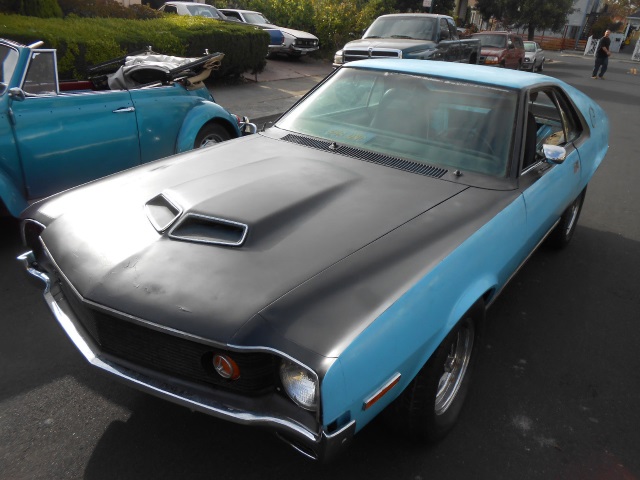
The 1970 AMC AMX arrived with its most aggressive styling yet. The front end featured a newly sculpted grille with a central divider, flanked by hood scoops and deeper body contours. The rear was reworked with a cleaner, more integrated look, and new taillights stretched across the deck lid. It had a shorter overall length than many competitors, and its stubby proportions gave it a tightly coiled, athletic stance.

AMC also introduced a new “C” stripe graphic that ran along the body sides, instantly recognizable and still iconic today. Paint options were bold—colors like Big Bad Orange, Big Bad Green, and Big Bad Blue reflected the era’s flair for the dramatic. Combined with available Go-Package stripes, Magnum 500 wheels, and a functional ram-air hood, the 1970 AMX looked every bit as serious as the performance it delivered.

Under the Hood: Pure American Muscle

Power was the AMX’s calling card, and in 1970, buyers had several serious options. The base engine was a 360-cubic-inch V8 producing 290 horsepower, but most enthusiasts went straight for the 390. This 390-cubic-inch Typhoon V8 produced a formidable 325 horsepower and 420 lb-ft of torque, numbers that put it squarely in big-block territory.

Equipped with a four-barrel carburetor, dual exhausts, and optional ram-air induction, the AMX 390 could rip from 0 to 60 mph in around 6 seconds—a genuinely impressive figure for its time. Top speed was over 120 mph, and with a 4-speed manual gearbox, it delivered a raw, mechanical driving experience that muscle-car fans crave even today.

AMC’s “Go Package” made the AMX even more formidable. It included front disc brakes, upgraded suspension, a heavy-duty cooling system, a limited-slip rear axle, and those signature rally stripes. The combination made the AMX as capable on a winding road as it was in a straight-line sprint.

Inside the Cockpit: Sport Meets Comfort

The 1970 AMX may have been a stripped-down performance car at heart, but its interior didn’t feel cheap. AMC went out of its way to make the cockpit driver-focused and surprisingly refined. The twin-pod instrument cluster was wrapped in woodgrain trim, and high-back bucket seats with bold stitching provided solid lateral support.

Optional features like air conditioning, an AM/FM radio, tilt steering, and even leather upholstery gave the AMX an upscale touch not often found in other muscle cars. It struck a unique balance—part hot-rod, part grand tourer—allowing it to appeal to both young performance buyers and older enthusiasts looking for something more distinctive.

On the Street and Track

While AMC lacked the massive marketing budgets and racing dominance of its Detroit rivals, the AMX still made its presence known on the performance scene. It competed in SCCA events and even set multiple speed records at Goodyear’s Texas proving grounds. The AMX’s shorter wheelbase made it nimble, while its wide track and solid V8 muscle made it genuinely competitive against more famous nameplates.

Road testers of the day praised its acceleration and handling, calling it one of the most balanced muscle cars available. Car and Driver noted that while it lacked some of the polish of the Corvette or Mustang, it made up for it in attitude and individuality—a car that turned heads everywhere it went.

The End of the Line—and the Beginning of a Legacy

Unfortunately, 1970 would mark the end of the true two-seat AMX. For 1971, AMC shifted the AMX badge onto the longer, four-seat Javelin platform. The market for two-seat performance cars had shrunk, and rising insurance rates and emissions standards were beginning to squeeze the entire muscle-car segment.

Production of the 1970 AMX totaled just under 4,000 units, making it one of the rarest muscle cars of its era. Its limited production numbers, coupled with its distinctive design and performance, have made it a favorite among collectors today. Restored and original examples command strong prices, especially those equipped with the 390 V8 and the Go Package.

Why the 1970 AMX Still Matters

The 1970 AMC AMX remains a fascinating example of American ingenuity and defiance. It was built by a small company with a fraction of the resources of General Motors or Ford, yet it delivered a car that could hold its own against almost anything on the road. Its combination of power, rarity, and bold design continues to earn it admiration from enthusiasts and collectors who appreciate cars that dare to be different.

Today, the AMX stands as a symbol of independence—a car for those who love performance but don’t follow the crowd. Whether parked at a car show, blasting down a mountain highway, or sitting proudly in a private collection, the 1970 AMX reminds us that greatness in the muscle-car world wasn’t limited to the biggest names. Sometimes, the most interesting stories come from the underdogs.

In an era dominated by Mustangs and Camaros, the 1970 AMC AMX proved that American Motors could build a car just as fast, just as stylish, and perhaps even more distinctive. It may not have won the sales race, but it captured something even more enduring—the respect of enthusiasts who value originality, engineering, and the spirit of rebellion that defined the golden age of American muscle.

There’s really something about the proportions on these old AMX’s. Maybe it’s the close-coupled look, maybe it’s the small size. Either way these old AMC Amx’s are really interesting old cars that are the right size and can always be used as a daily driver. Plus, they’re priced way below the Camaros and Mustangs – and certainly not with the Mopars!